
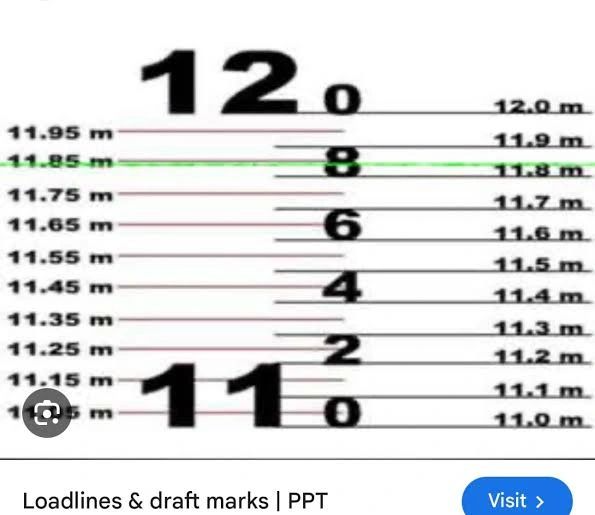
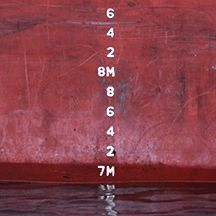
Draft is the basic measurement that connects the ship’s position in the water to its actual weight. It’s the vertical distance from the waterline down to the bottom of the keel. When the draft increases, the vessel is displacing more water, which means its weight has increased. This simple relationship is the foundation of the entire draft survey method.
Draft is read from the numbers marked on the hull. These draft marks appear forward, aft and at midships on both sides of the vessel. Each number shows the distance from that point on the hull to the underside of the keel. Marks may be in meters or feet, and they should be raised, welded or clearly outlined so the waterline can be read without doubt. Midships marks matter the most because the midships draft carries the greatest weight when calculating the three-quarter mean draft used for hydrostatic tables.
Surveyors read the draft directly from the hull whenever conditions allow. If the marks are hard to see, or if the vessel has no midships scale, the draft can be measured indirectly by using a known reference line such as the deck line and calculating the difference to the waterline.
Once the six drafts are taken, the first step is to average the port and starboard values at each location. These mean drafts must then be corrected to the forward and aft perpendiculars, because hydrostatic tables are built on those reference points, not on the physical position of the marks. The corrected drafts also reveal any hogging or sagging of the hull. A single representative draft is then found using the three-quarter mean formula. If the hydrostatic data is based on the moulded base line rather than the extreme keel, the thickness of the keel plate must be added before entering the tables.
Draft is the measurement that ties the real ship in the water to the displacement values in the hydrostatic book. Every other calculation in a draft survey depends on getting it right.
